Patient Line
What is Patient Line?
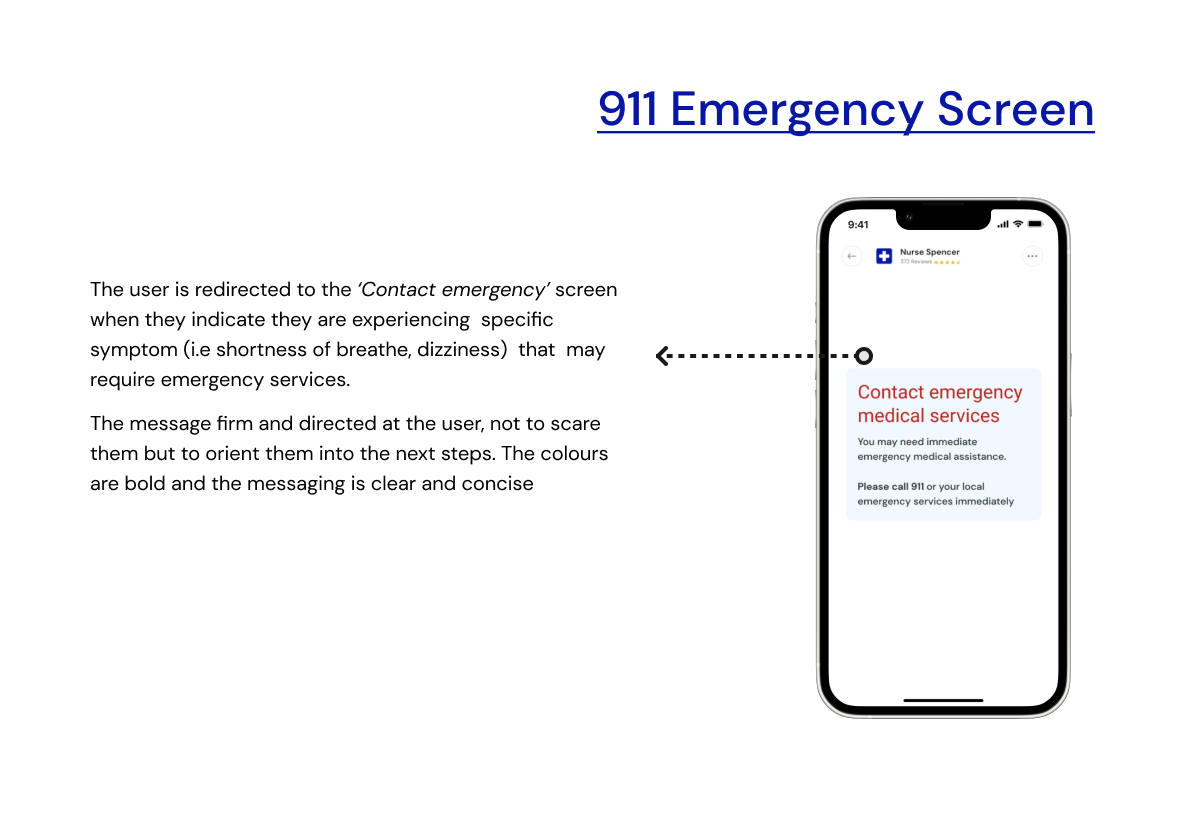
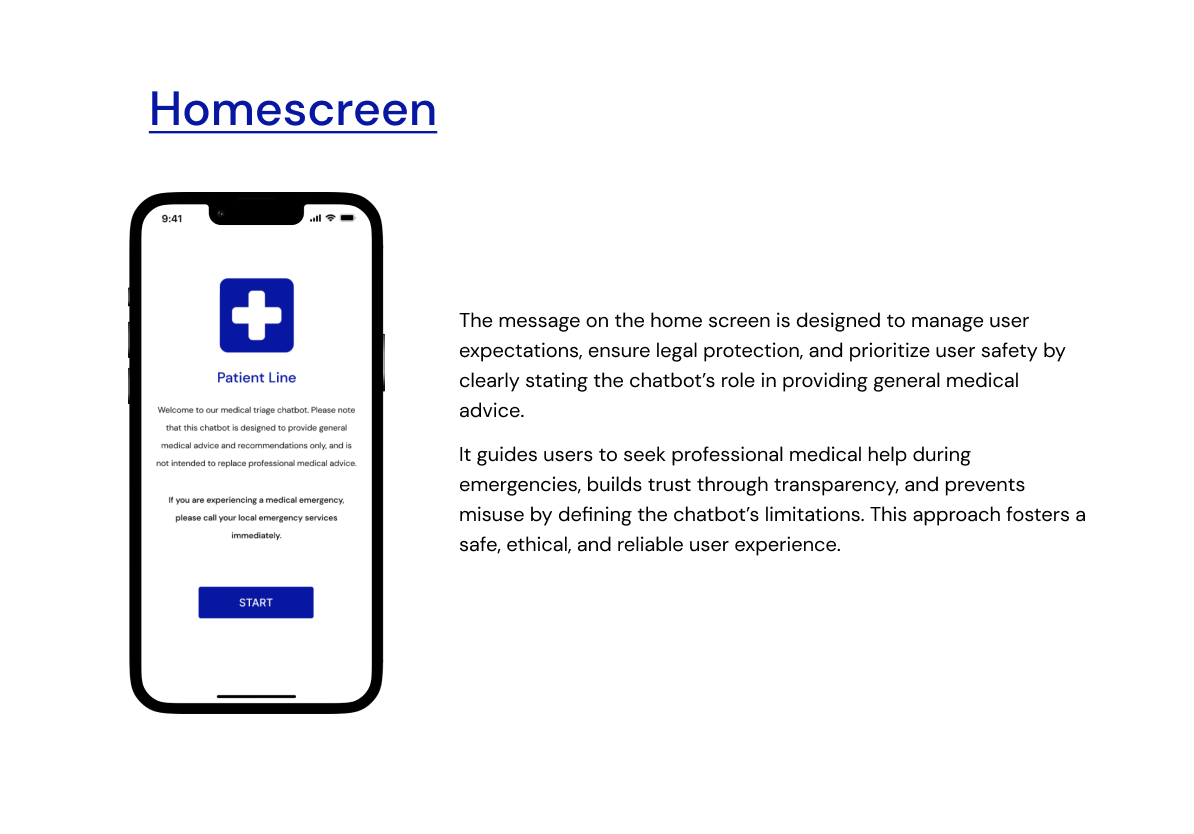
PatientLine is a chatbot designed to help nurses triage patients by accessing their healthcare needs. The chatbot is designed to provide an efficient and convenient way for patients to get answers to their medical questions, make appointments, and connect with healthcare professionals.
01
Challenge
The current patient triaging process is time-consuming and confusing, requiring patients to fill out forms and answer questions about their medical history and symptoms. The goal is to implement a chatbot that guides patients through this process, asks relevant questions, and provides personalized care recommendations or assigns them to one of five urgency categories.
02
Discovery Research and Personas
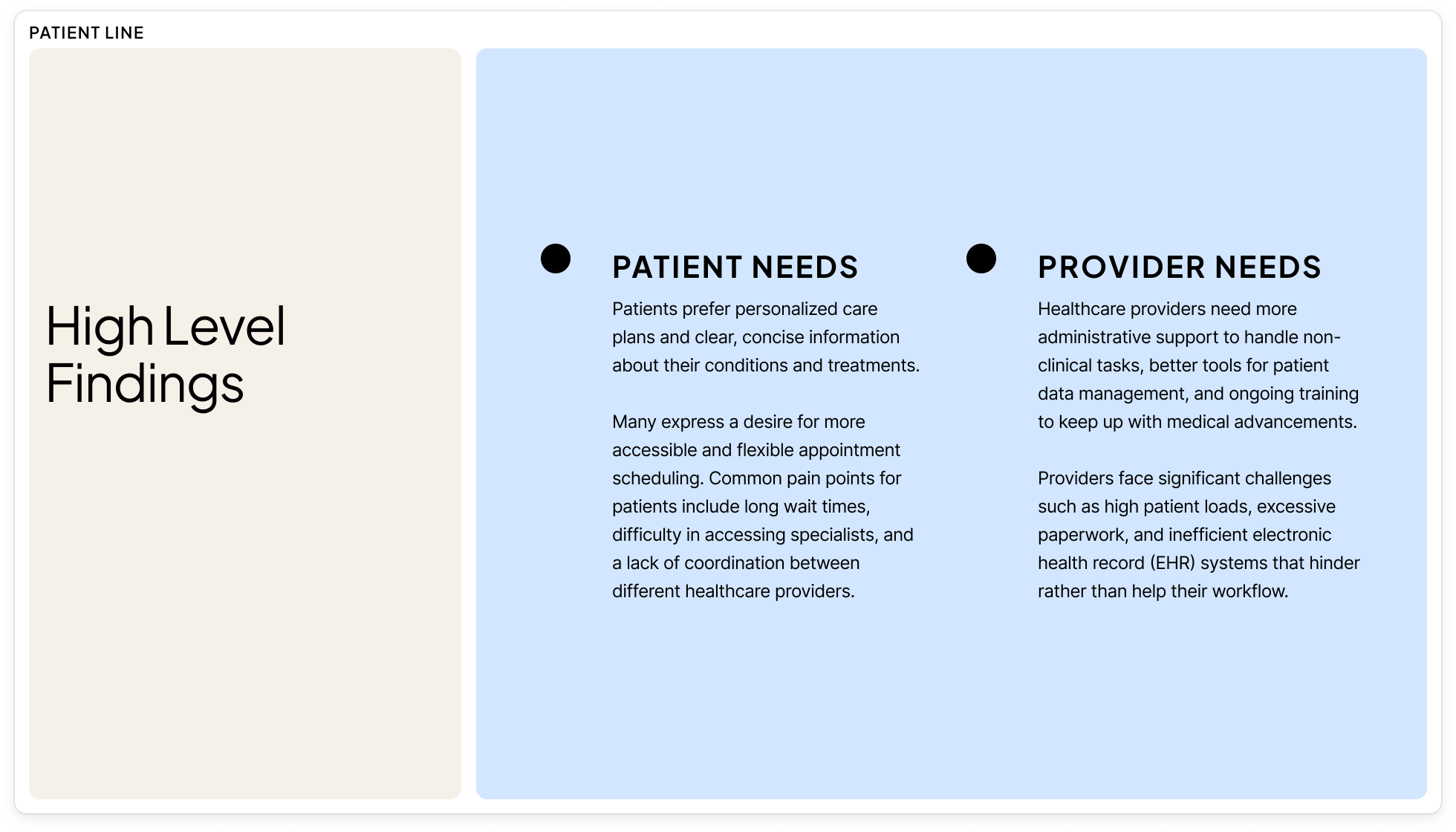
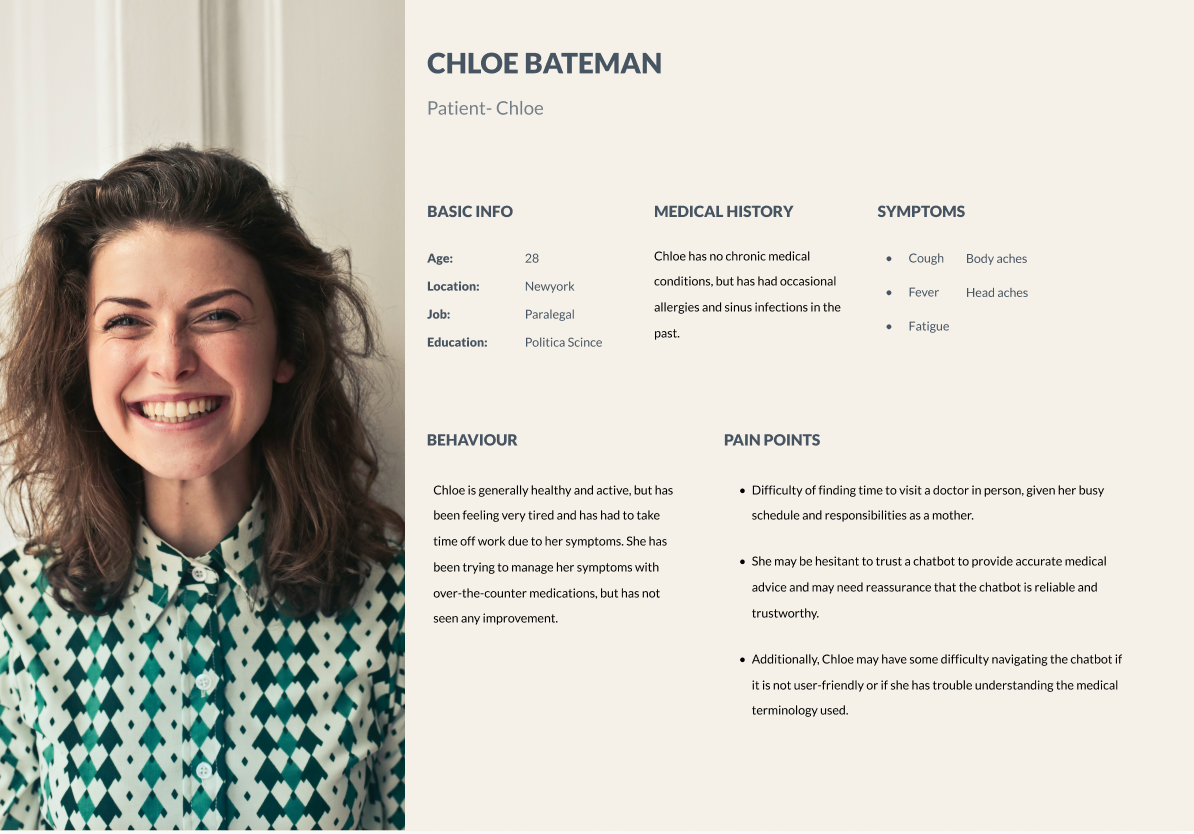
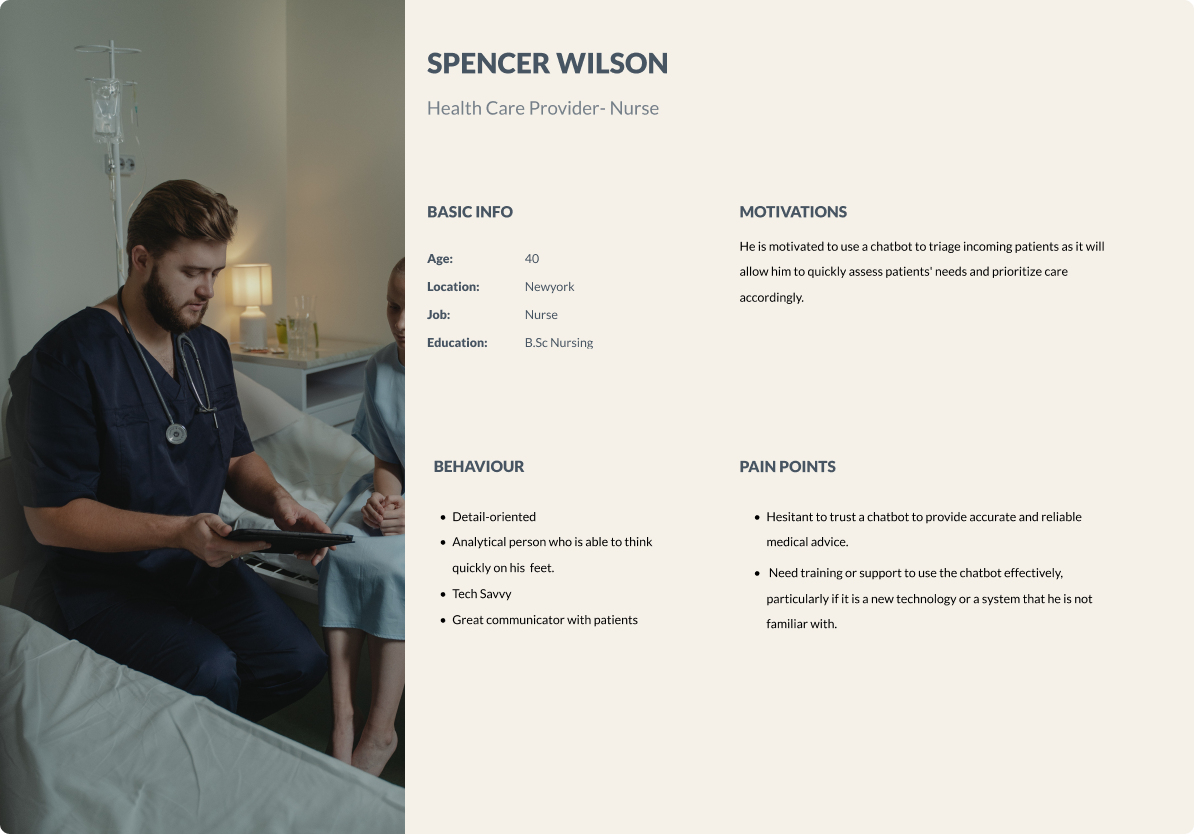
Research was conducted in a previous study aimed at understanding the needs and pain points of patients and healthcare providers in the context of healthcare. This qualitative study involved interviews with both patients and healthcare providers.
03
Product Features and Ideation
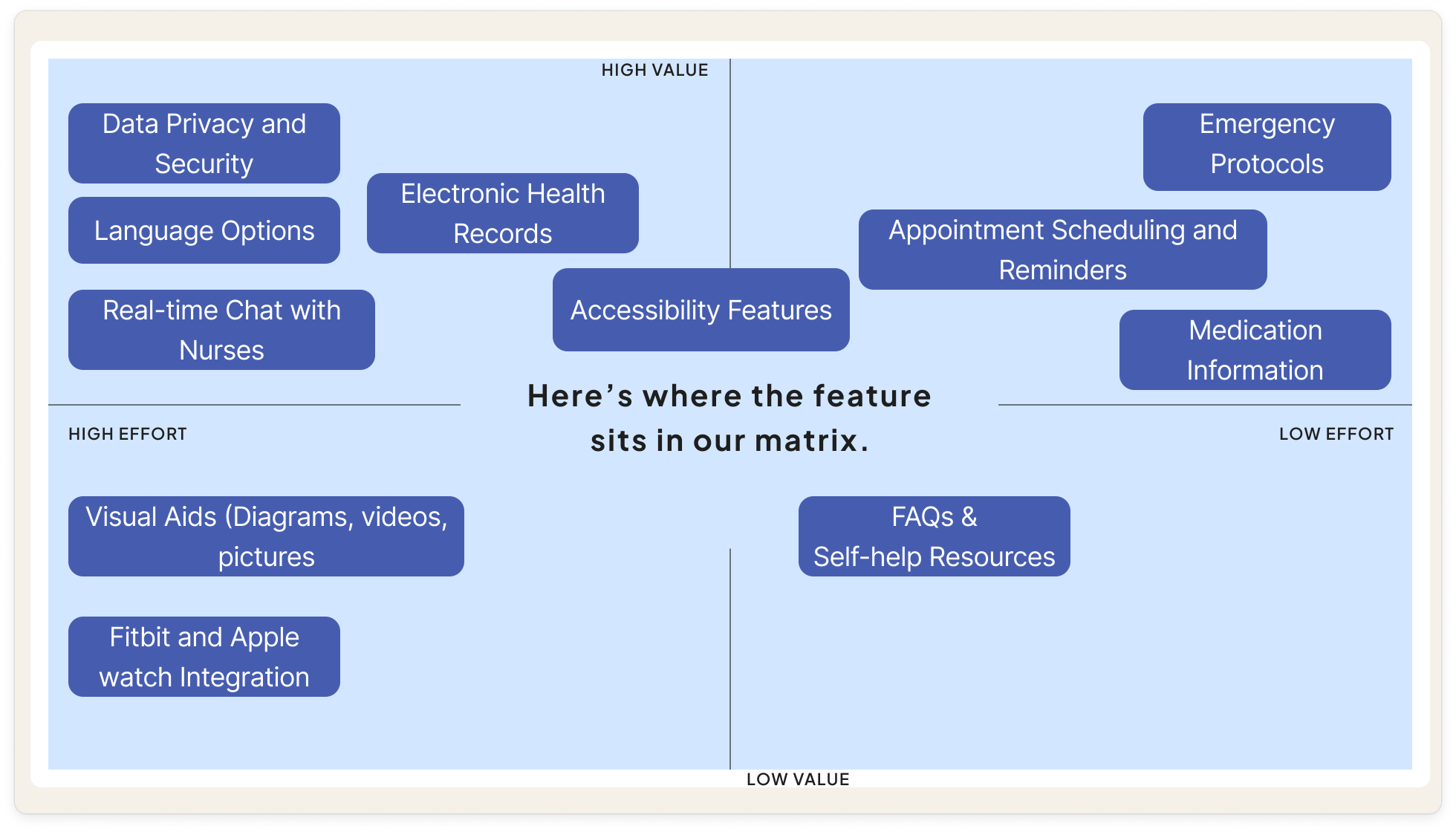
A feature matrix was built to help prioritize ideas based on effort and value. I chose this approach because it provides a foundation for decision-making and rapid prototyping, ensuring that the design process remains focused and efficient. .
04
User Point Of View (POV's)
Patient View
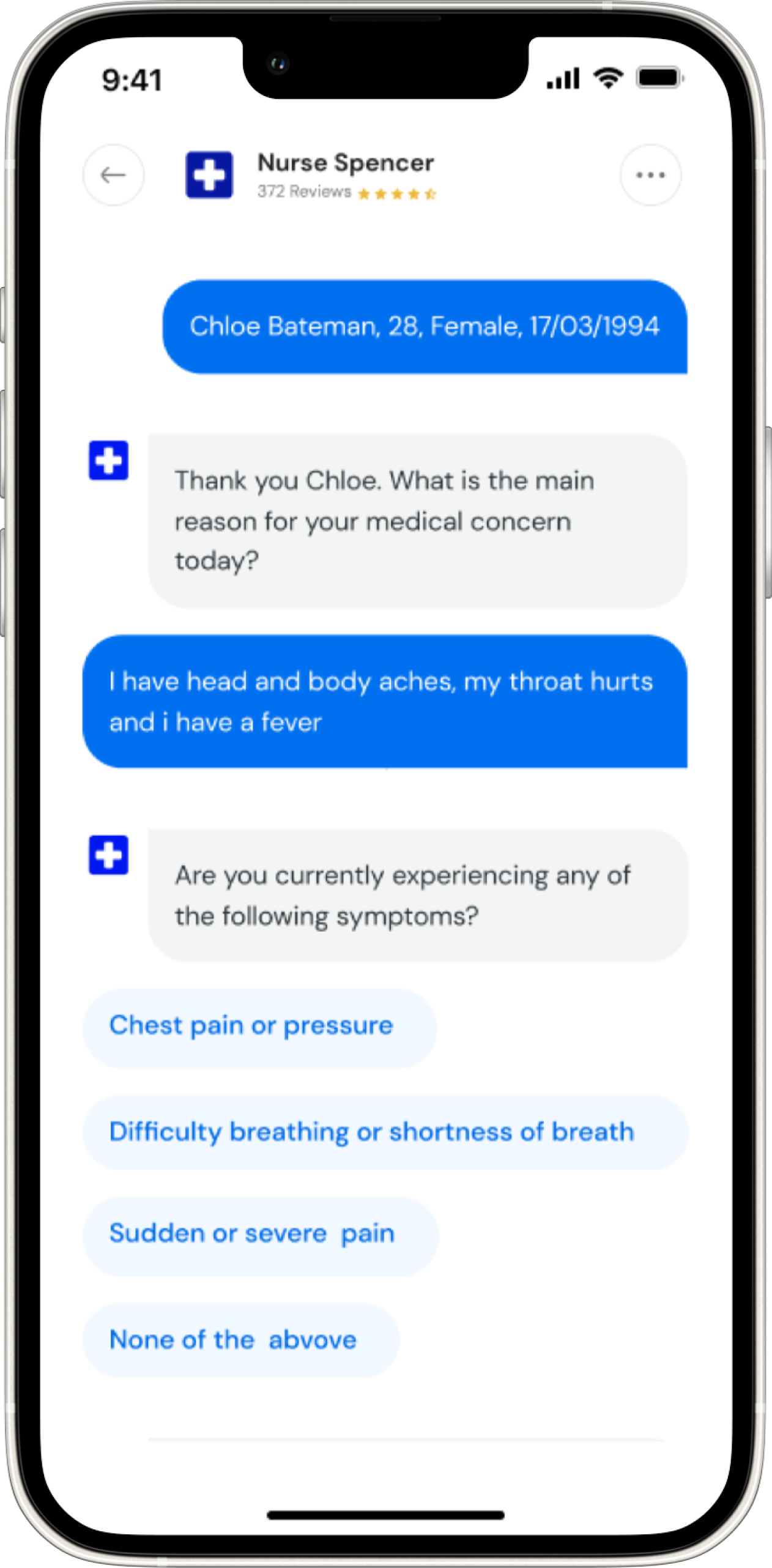
Adopting an iMessage-style UI for a healthcare chatbot offers significant advantages by leveraging user familiarity with the interface, making interactions intuitive and user-friendly. This conversational flow fosters comfort, especially when discussing sensitive health issues. The clear, organized presentation of information helps users easily track their conversation history, while the integration of multimedia, such as images and attachments, enhances the exchange of relevant health information. Additionally, real-time feedback features like typing indicators and read receipts create a sense of connection and support. Overall, the iMessage-style UI ensures a consistent and seamless experience across various devices, making it an ideal choice for healthcare applications.
Healthcare Provider View
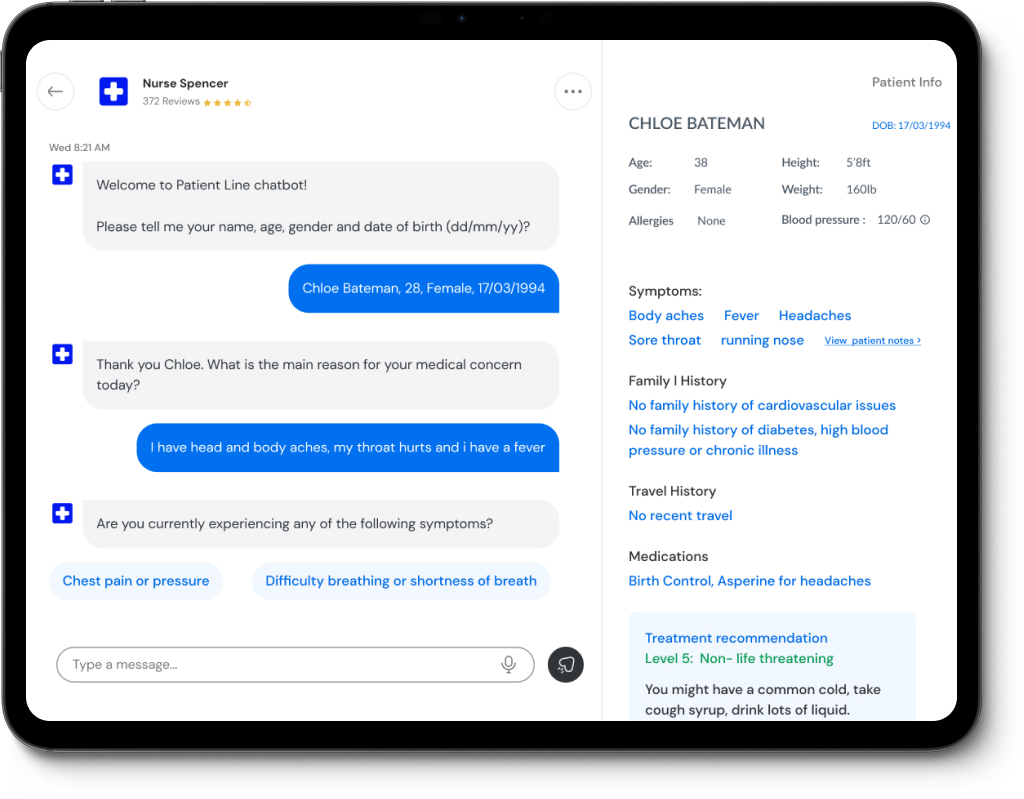
A dual-screen view in a healthcare triage chatbot, with one screen displaying the patient chat and the other showing the EHR being automatically updated, offers significant advantages. It enables real-time documentation, ensuring accurate and up-to-date patient records without manual entry. This setup enhances efficiency by allowing healthcare providers to view both the chat and EHR simultaneously, streamlining workflows and supporting quicker decision-making. With immediate access to the patient's history, providers can deliver more personalized care, reducing errors and improving communication. This integration saves time, minimizes manual data entry, and offers a seamless, comprehensive view of the patient’s health status
05
Prototype & Testing
Prototype
Purpose: Created clicked and high fidelity prototype on both mobile and desktop screens to validate design concepts, test usability and demonstrating key features.
Tools: Figma
Testing
Next steps would be to conduct usability tests, observing participants as they interact with the chatbot, and collect feedback through surveys and interviews. Analyze the data to identify and prioritize areas for improvement, then refine the chatbot accordingly. Finally, conduct a final round of testing to validate the changes before Beta launch.
06
Future Considerations
Future considerations for the healthcare triage chatbot include expanding multilingual support. Additionally, incorporating a patient feedback mechanism, regularly updating the user experience, and refining emergency handling protocols will be crucial for continued improvement and effectiveness.